What Is Herbalism, Really?
Photo @thlt_lcx
On a fundamental level, herbalism is the practice of using plants and plant-derived preparations to support health, prevent illness, and treat physical conditions. It represents the oldest and most widely used system of medicine in the world, with distinct traditions arising from each of the major regions of the globe.
While modern medicine has almost completely taken over in the western world, herbalism is still a highly relevant therapeutic framework with its own methodologies, history, and foundational philosophy.
As well-known herbalist Rosemary Gladstar says,
“It’s not the only system of healing. It doesn’t work best for everything, by any means, but it complements modern medicine."
I like to think of the strengths of modern medicine as interventionary and the strengths of herbalism as preventionary. Made up words, yes, but they capture the meaning. Modern medicine is your best bet in an emergency but herbalism can support good health and even help you correct issues and restore balance to the body before more serious medical intervention is needed.
What Herbalism Involves
An herbalist's knowledge base is a distinctive blend of botany, chemistry, observation, and intuition. There's a curiosity about plants that extends from growing conditions to behaviours to the unique properties they possess. Herbalists are deeply knowledgeable about how plants can help us in the broader sense, and even more specifically so for the individual plants they like to work with. Every herbalist's knowledge base will be slightly different, depending on their training and which plants they turn to.
The core practice of herbalism is built upon a few key operational disciplines:
Botanical Identification and Foraging: Accurately identifying wild species and implementing sustainable harvesting protocols (often called wildcrafting) to protect wild plant populations and minimize disruption.
Cultivation: Growing medicinal plants in controlled environments or community settings to ensure clean, predictable yields.
Remedy Formulation: Processing raw plant material into specific delivery forms based on solubility and intended use:
Infusions and Decoctions: Water-based extractions (teas).
Tinctures: Alcohol- or glycerin-based liquid extractions.
Topicals: Oils, salves, poultices, and liniments.
Constitutional Evaluation: Assessing a person's individual physiological patterns (such as metabolic heat, dryness, or tissue tone) to gain a holistic understanding of the issues they're facing, rather than treating an isolated symptom.
Gladstar notes that the practice requires a broad perspective on what a medicinal plant actually is:
"Webster's dictionary defines an herb as a non-woody plant. But herbalists define all plants that are useful as herbs, and basically, I would say that's all plants on the planet... I define herbalists as people who work with plants on any level."
Every plant has a purpose in our interconnected ecosystem, whether or not that purpose is to help humans is another matter. There are somewhere between 30,000 to 300,000 edible plant species on the plant, and yet there are only 12 that make up about 75% of our global food supply, along with a handful of animal species. So there’s clearly room to get more beneficial plants into our diets and home apothecaries.
Science Meets Tradition
Modern Western herbalism operates at the intersection of empirical science and historical tradition. It relies on two distinct validation models:
1. The Biomedical Model
Plants contain active constituents and secondary metabolites such as alkaloids, flavonoids, tannins, and volatile oils that interact directly with human physiology.
A significant portion of modern pharmaceuticals were originally isolated from plant extracts before being synthetically reproduced.
Not all plants have been equally well-researched, but there is an established materia medica in every major herbal tradition that provides us with a solid understanding of which plants contain which compounds and how we can reasonably expect those compounds to behave in the body.
2. The Energetic Model
Most traditional systems categorize plants and body states by energetics (e.g., hot, cold, damp, dry, tense, or relaxed).
Rather than forcing a biochemical pathway to change, herbalists use these categories to restore metabolic balance.
Clinical herbalist Matthew Wood distinguishes this approach from conventional medicine:
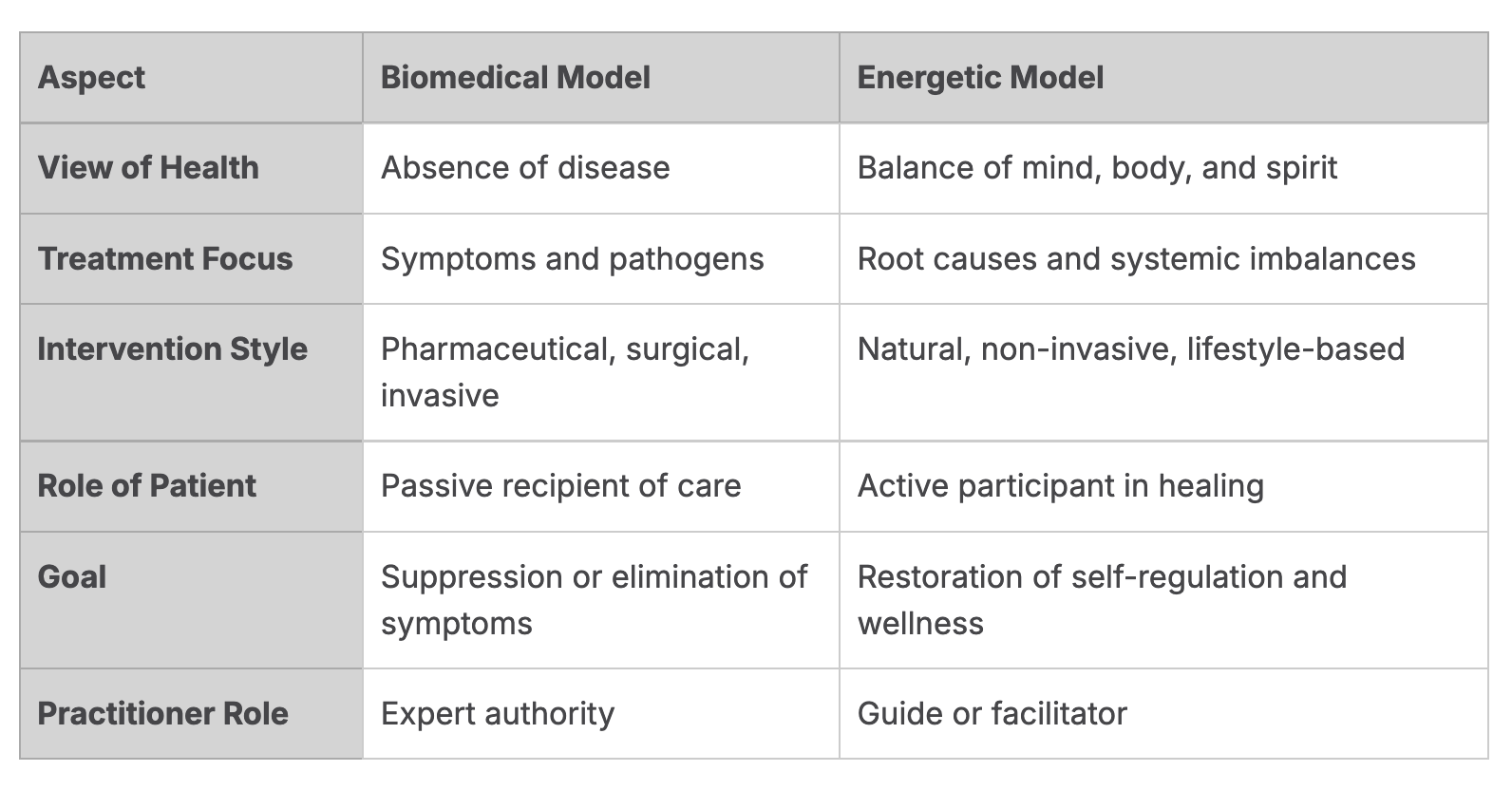
"The usual biomedical approach is to compensate for the incapacity of the body by introducing a drug that makes the body do what it is supposed to do. The holistic approach is different. Instead of trying to force the body to operate as we want it to, we try to return it to a state of health where it can take care of itself."
In modern medicine, the biomedical model intervenes directly using drugs, surgery, or other technologies to correct specific physiological dysfunctions. In contrast, the energetic or holistic model used by most herbalists seeks to restore balance across the mind, body, and spirit, empowering the body’s innate ability to heal itself through lifestyle, nutrition, and natural therapies.
Herbal medicine does not treat diseases or symptoms in insolation; it aims to support the whole individual. Rosemary Gladstar summarizes this foundational rule of the craft:
"When we talk about the art of herbalism, when you're working with people who have health problems there's standard recipes. There's constitutional types, but really every single individual is different... So herbalists always say, 'We treat individuals, not disease.'"
Professional Status and Regulation in Canada
In Canada, herbalism is currently an unregulated profession. There is no federal or provincial licensing body that grants a legal title of "Herbalist," nor are there mandatory educational standards required by law to practice.
There are some common naming practices that give you an idea of the amount of training an herbalist might have had, though because the field is unregulated, the responsibility for safety, ethical practice, and recognizing the limits of one's training rests entirely on the individual practitioner.
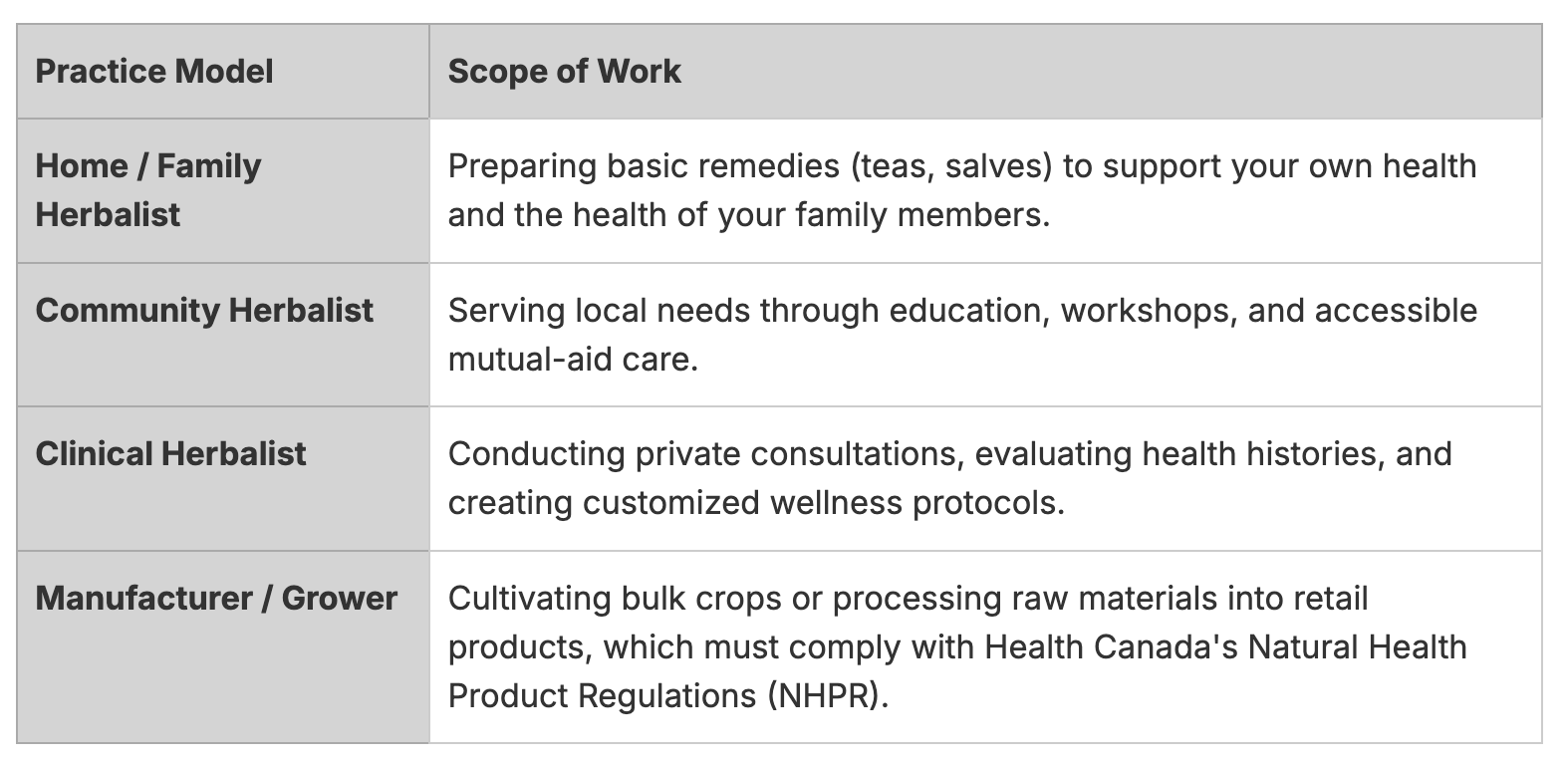
You can see how an interest in herbalism might ladder up, starting with exploring herbs for your own health before extending out to your family and community. Almost like an interest in plants becomes a gateway drug for healing!
Natural Does Not Equal Safe
Plants are chemically complex and pharmacologically active.
Herbs can cause adverse side effects, trigger allergic reactions, and even cause dangerous interactions when taken alongside prescription medications. For example, herbs that alter liver enzyme pathways can significantly speed up or slow down how the body processes pharmaceutical drugs. So even though a herb is natural, that doesn't mean it's universally safe or appropriate for everyone.
How to Learn Herbalism
Learning herbalism safely requires a methodical, step-by-step approach. Experienced practitioners advise against trying to memorize hundreds of plants at once. With somewhere between 50,000 and 80,000 medicinal plants in the world, it would be impossible to remember each of them with any detail even if you tried!
Instead, focus on mastering the botany, safety profile, extraction methods, and actions of a few local plants before moving on. Start with the plants you already know and use and deepen your knowledge of them over time. Then, one by one, add more. Before you know it, you'll be a herbalist with a wealth of herbal knowledge you can share!
TL:DR – Key Takeaways
Definition: Herbalism is the functional use of plants and plant extractions to support whole body health and wellness, combining traditional knowledge with modern research.
Methodology: It utilizes a holistic framework, matching the energetic profiles of plants to an individual's specific constitution rather than focusing solely on isolated symptoms.
Legal Status: In Canada, herbalism is an unregulated profession. Practitioners operate without standard licensing, requiring high personal standards for ethical study and safety.
Safety: Herbs contain potent chemical compounds. They are not universally safe just because they are natural, and they require careful dosing and attention to drug interactions.
Sources:
The joe gardener Show with Joe Lamp’l. Episode 423. Understanding Herbalism, with Rosemary Gladstar. https://joegardener.com/podcast/423-understanding-herbalism-with-rosemary-gladstar/
The Practice of Traditional Western Herbalism: Basic Doctrine, Energetics, and Classification, 2004. Matthew Wood