Burdock, Back Alley Nuisance or Resilient Herbal Ally?
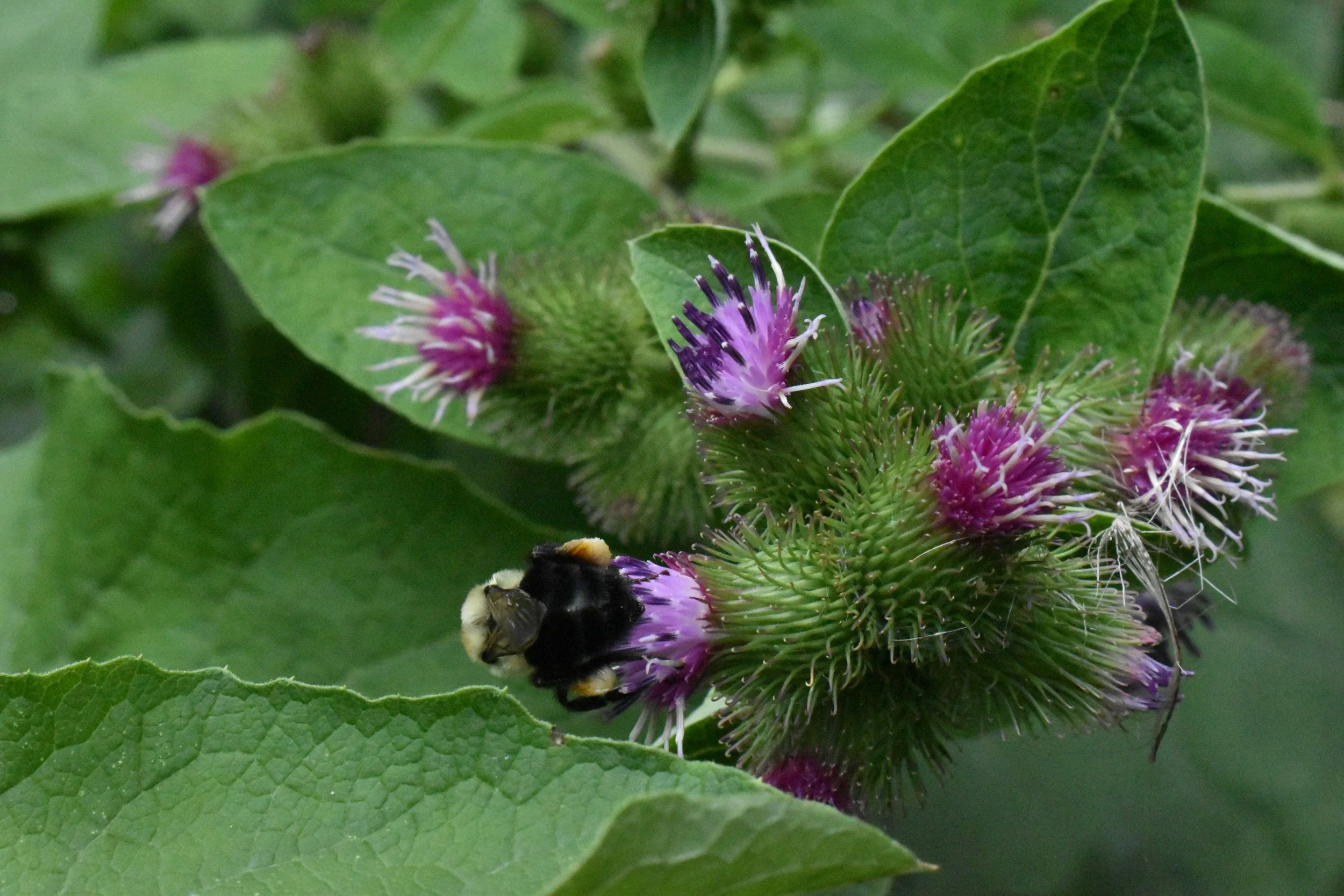
Photo @ghoulington
To most people, burdock is just a weed. A scraggly plant with oversized leaves and clinging burrs that stick to your clothes and get all tangled up in your dog’s fur after he’s gone on a run through the grass. A nuisance.
But to the herbalists and plant enthusiasts out there, burdock (Arctium minus and Arctium lappa) is something else entirely. A healer. A nutrient-rich food. A herb-friend growing in plain sight.
Let’s dig in.
Botanical Profile
Latin name: Arctium lappa (greater burdock), Arctium minus (lesser burdock)
Family: Asteraceae (daisy family)
Life cycle: Biennial
Parts used:
Root: most frequently used part of the plant, used to aid detoxification of the liver
Leaf (harvested in late summer, topical)
Stalk: peeled, cooked
Seed: less commonly used, infusions of seeds are used to treat acne, rashes, allergic reactions, and other skin conditions
Native to: Europe and Asia, but naturalized across all temperate regions, including North America
Actions:
Detoxifying
Diuretic
Antibiotic
Antiseptic
Anti-inflammatory
Alterative
Hepatic
Lymphatic
Constituents:
Glycosides
Flavonoids
Tannins
Polyacetylenes
Volatile oils
Amino acids
Vitamins (B1, B2, C, A)
Minerals like potassium and magnesium
Energetics:
Cooling
Moistening
Deeply nourishing
Where Burdock Grows
Burdock is a classic weed, thriving in disturbed areas, including:
Abandoned lots and alleyways
Roadsides and ditches
Edges of fields and fence lines
Gravel slopes and compacted soils
It especially loves moist, nitrogen-rich soil, but it’s tough — able to push its taproot through clay, rubble, and broken ground. In many ways, burdock is a soil healer, showing up where the earth has been mistreated or disturbed, and slowly drawing minerals back to the surface.
Status as a Noxious Weed
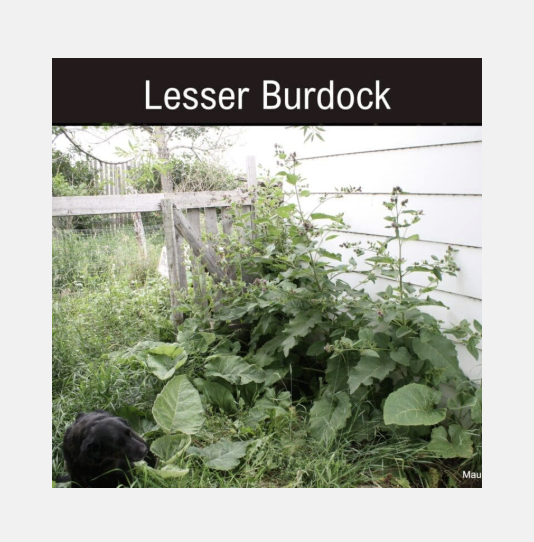
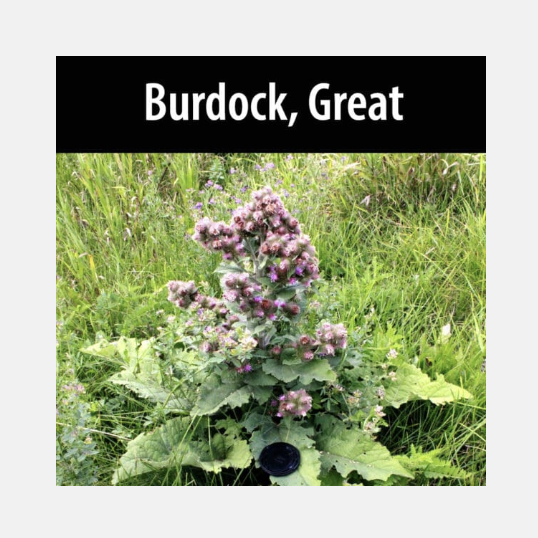
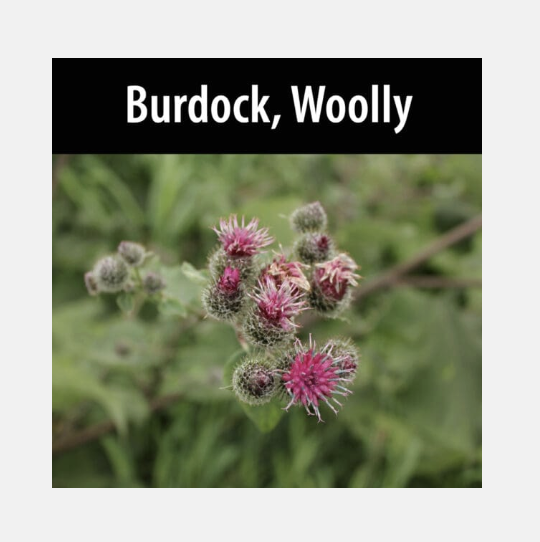
The Alberta Invasive Species Council lists lesser, great, and wooly burdock as noxious weeds. British Columbia has classified burdock as a noxious weed only in the following regions: Bulkley-Nechako, Cariboo, Columbia-Shuswap, Fraser-Fort George, Kitimat-Stikine, North Okanagan, Okanagan-Similkameen, Peace River, and Thompson-Nicola.
Traditional Uses in Western Herbalism
In Western herbal medicine, burdock root is traditionally best known as a:
Blood purifier (reflecting its detoxifying, liver-supportive action)
Lymphatic tonic (used to support healthy fluid movement in the body)
Skin remedy (used internally and topically for eczema, acne, and boils)
Digestive bitter (stimulates digestion, liver, and bile flow)
Mild diuretic (supports urinary function and elimination)
Herbalists often include burdock in formulas for chronic skin conditions, joint pain, sluggish digestion, and general constitutional support. It pairs well with yellow dock, cleavers, and dandelion. Burdock has a long-standing place in spring cleanses and seasonal transitions, often used to support the liver and blood after the heavy winter season.
Global Traditions
While Rocky Mountain Herbs focusses on Western herbalism, it’s important to note that burdock has a long history of use in:
Traditional Chinese Medicine, often combined with other herbs to treat "wind-heat" conditions
Japanese cuisine, where it’s known as gobo and used as both food and medicine
Ayurveda, where it’s occasionally referenced for its cooling and purifying properties
These global uses are a sign of it’s deep usefulness, and echo its detoxifying and nourishing reputation.
Burdock in the Kitchen
Long before it was a “detox herb,” burdock was just a simple food. In Europe and North America, burdock root was once a common addition to broths, stews, and even beer. In Japan, it’s still widely consumed today. It’s flavour profile is earthy, nutty, slightly sweet, and faintly bitter. Somewhere between carrot and artichoke with a hint of celery.
How to Prepare Burdock Root
Harvest first-year roots in the fall or early spring before the plant flowers. They’ll be easier to dig and less woody if you follow this timing.
Basic Prep:
Scrub well or peel if desired
Slice into thin matchsticks, coins, or strips
Use fresh or dry for later use
Cooking Methods:
Sautéed: With sesame oil, tamari, garlic, and shredded carrots
Roasted: Toss with olive oil and roast like other root vegetables
Pickled: Fermented or vinegar-pickled for good gut health
Broth base: Add to bone broth or vegetable stock for a mineral-rich, earthy infusion
Tea: Simmer gently for 20–30 minutes for a rich, medicinal decoction
Safe Foraging
Harvest safely: Forage wild burdock only in areas free from road runoff, pesticide drift, or industrial waste. Burdock is a bioaccumulator, meaning it pulls toxins from the soil. This will probably be tricky because burdock loves disturbed soil so the places you shouldn’t pick it from are the very places you’ll most often see it.
Use in moderation: If you're already on diuretics or medications that affect blood sugar, talk to your doctor first, burdock can have mild hypoglycaemic effects when taken in large amounts.
Always positively ID burdock: In Southern Alberta, you’re unlikely to come across any deadly look-alikes, as burdock is quite distinctive. For young plants, you’d have to watch out for common cocklebur, but they’re easy enough to tell apart upon closer inspection. Look for a basal rosette, with round to oval shape leaves that have wavy edges and prominent veins running through them. The mature leaves look a lot like rhubbarb, but the stalks aren’t red and the undersides of burdock leaves are hairy. A mature burdock plant can get up to 180cm tall, and the flowers will be round and dense with purplish bristles. When they mature, they turn brown and easily break off and cling to everything the touch. The seed is inside the burs, so this is how they spread.
Call it a weed if you like. But in the right hands, it’s food, medicine, and a reminder that healing often grows where we least expect it. ;)
Sources:
Easley and Horne, The Modern Herbal Dispensatory
Chevallier, The Encyclopedia of Herbal Medicine
The Government of Ontario, https://www.ontario.ca/document/weed-identification-guide-ontario-crops/common-burdock
The Herbarium by The Herbal Academy, https://herbarium.theherbalacademy.com/monograph/burdock/